
Villanova Men's Basketball
Villanova HC Kevin Willard Playing Against His Father’s Defense

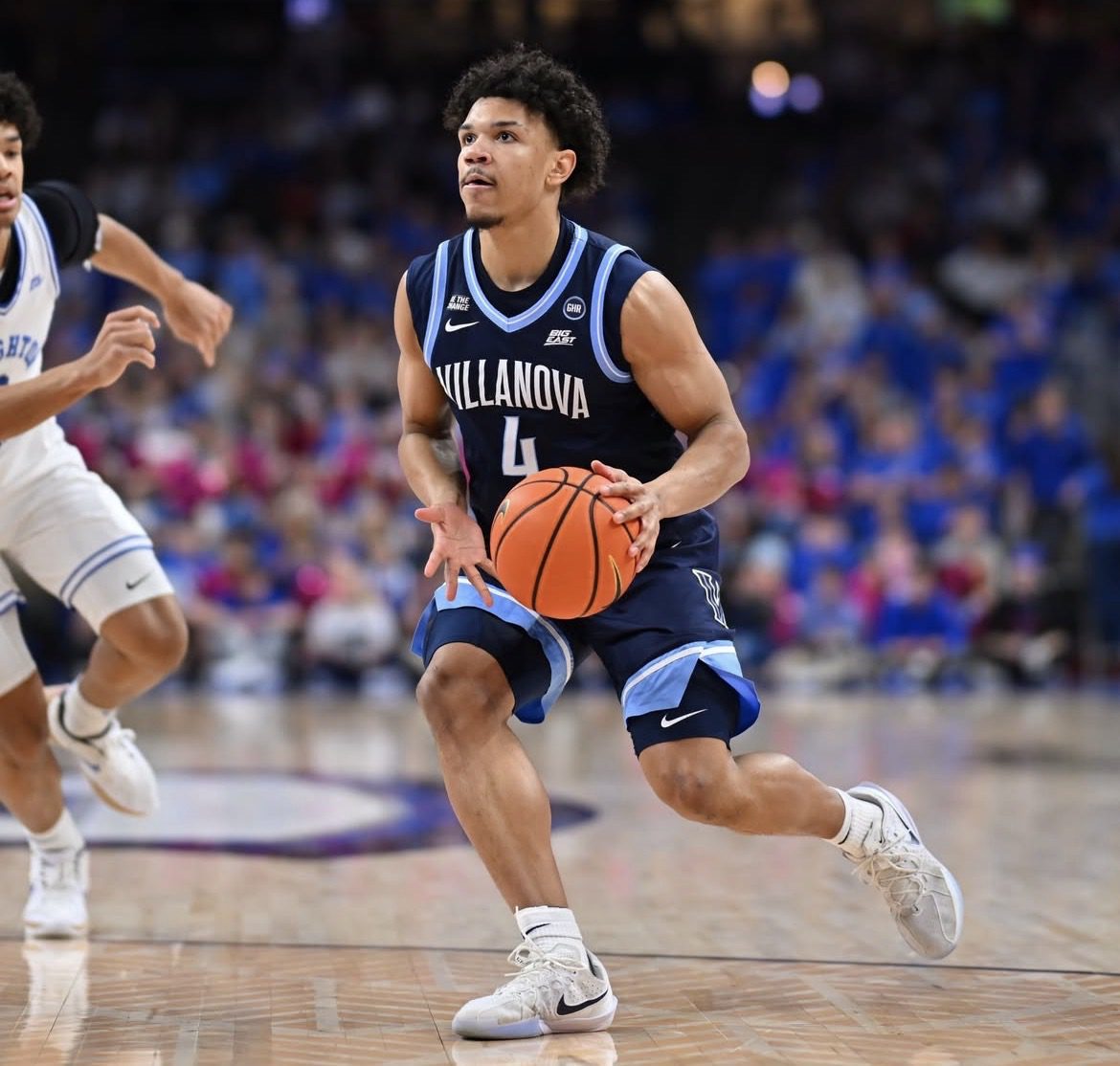
While Villanova head coach Kevin Willard said he doesn’t know Utah State head coach Jerrod Calhoun well, he grew up around the Aggies’ defense. That’s because Willard’s father, Ralph, helped pioneer the matchup zone defense that Calhoun runs.
The matchup zone integrates elements of man-to-man defense: an on-ball defender leads the charge and a big man anchors the defense down low, freeing up the other three players on the court to interfere with passing lanes and fence off the perimeter.
Willard described the confusing nature of the matchup zone.
“I had to listen to my dad when I drew Utah State because Coach Calhoun does it probably better than anybody. And I’ve tried it. The match-up zone is really difficult,” Willard said.
“And I think what I’ve seen from them is, the difference from last year’s team to this year’s team, is guys that have played in it multiple years. And I think that’s why it’s so good now is it’s a defense where most of the time they don’t know what they’re doing. So that means the offense has no clue what they’re doing. That’s kind of what it was always designed to be.”
Experienced Communicators
Utah State can depend on their experience against a young Villanova squad. The Aggies retained starting guards Drake Allen and Mason Falslev from last season and, while fellow starters like lead scorer MJ Collins Jr. and forward Zach Keller transferred in, they’re seniors who managed to pick up Calhoun’s defense faster than a younger player might have.
“I think Coach Calhoun — the difference, I watched their UCLA game last year — the difference from last year to this year’s team is it’s crazy how much better they are at it. And he’s taken what my dad’s defense was, and he’s actually made it even a little bit better in my opinion,” Willard said. “More than anything, they are an older team, they’re physical, they’re very good defensively. But they’re so connected and they communicate so well on both ends of the court.”
Willard continued to emphasize the importance of communication.
“I’m so impressed with how connected they are. I always say you know a team’s good by how they communicate, and if you could see a team communicate on film, then you know they’re really good,” Willard said.
“And this is a team, when I watched them on film, from the first moment — I watched their last five games — from the first moment I watched film I knew they were going to be a really good team because they communicated. Not only did they communicate during the play, but what I’ve been most impressed with, with guys like Collins and all these older guys, is that they really come together when there’s a dead ball.”
Despite Willard’s familiarity with the matchup zone, he said he can’t rely on his father’s advice to crack it.
Cracking the Aggies’ Code
Willard credited Calhoun for the way he placed his own stamp on the style, describing how he evolved from last season.
“Again, what’s really cool about my dad’s defense and what Coach Calhoun has done with it, is he’s put his own spin on it. It’s not like I’m going to call my dad up and be, like, all right, what gave you the hardest time? Because what gave him the hardest time might be totally different than what gives Coach Calhoun’s defense a totally different time,” Willard said.
“So we have a good feel for what we need to do to attack it. I think we’re going to have to adjust during the game because there’s one thing — it’s morphed into a little bit more of a man-to-man than it was last year. Last year I think it was a little bit more of a traditional 2-3 match-up. It’s kind of morphed into a little bit more of a man-to-man switching, not making nearly as many runs.”
Willard said Villanova will need to make their shots from deep in order to pressure the Aggies’ defense, opening up opportunities for pressure inside. The Wildcats’ shooting dried up in their upset loss to Georgetown in the Big East Tournament, and Willard said that can’t happen again.
“We’re going to have to make shots against the defense because they do such a good job on penetration of really going after the basketball. They use their length good. They use their physicality,” Willard said. “I think that’s what I’ve been most impressed with. They create turnovers for touchdowns. They capitalize on their turnovers so well, probably as good as any team I’ve seen in a long time.”
Spotlight On Defense
While Utah State’s defense drew Willard’s focus, Villanova will also have its hands full against the Aggies’ offense, ranked in the top 50 nationally in most scoring and efficiency metrics. Collins and Falslev both average more than 16 points per game, and their experience and physicality gives them an immediate advantage in college basketball.
Junior Tyler Perkins stands 6-foot-4 and keys the Wildcats’ defense with his physical play. He can account for one of Collins and Falslev, but that’ll leave at least one option open for the Aggies… and Perkins won’t play a full 40 minutes. Freshman point guard Acaden Lewis, who leads the team in steals, described how he’s developed as a defender over the course of the season.
“Just trying to pressure the ball. And when you pressure the ball up top and you make stuff, you muck it up a little bit, makes plays harder to run, makes actions harder to run, messes up passes, makes shooters not catch it in the pocket,” Lewis said.
“My goal every game is to be as disruptive as I can. Everyone makes mistakes on the defense but if you can be disruptive, use your hands well and let your hands go, I think it will help everybody else out as well as you. And also offense is way easier when you get stops and steals. You get to run, you get in a rhythm earlier, you get some of the nerves out, especially in the big games.”
Second Unit Stepping Up
Willard expects physical practices out of his players, preparing them for in-game reps when they’re in the gym. Lewis credited members of the Wildcats’ second unit like fellow freshman Chris Jeffrey for how they help set the tone in practice, earning their minutes on the court in doing so.
Jeffrey came to the Wildcats with a lingering knee injury that required surgery in mid-December. While he could’ve argued for a medical redshirt and retained another year of eligibility, Jeffrey made his way back on the court just five weeks after going under the knife. Willard said that the effort the true freshman showed encouraged his Villanova teammates to step up their own play, complementing Jeffrey for his loyalty in the flaky era of the transfer portal and NIL.
“I hope I get to coach Chris for as long as possible. Chris is one of those unselfish players in a selfish time. He really showed his true character when he could have peaced out and tried to redshirt. He sacrificed that for the better of the team,” Willard said.
“I think a big reason why we played so well in the second half of the season is we had guys looking at what Chris was sacrificing and what he was doing and really respected the shit out of that, to be honest with you. And I think Chris will get rewarded next year because of his sacrifice.”
Click here to read Utah State’s perspective on their matchup against Villanova.