
Villanova Men's Basketball
Villanova Basketball: Continuity Worth a Premium in the Portal Era

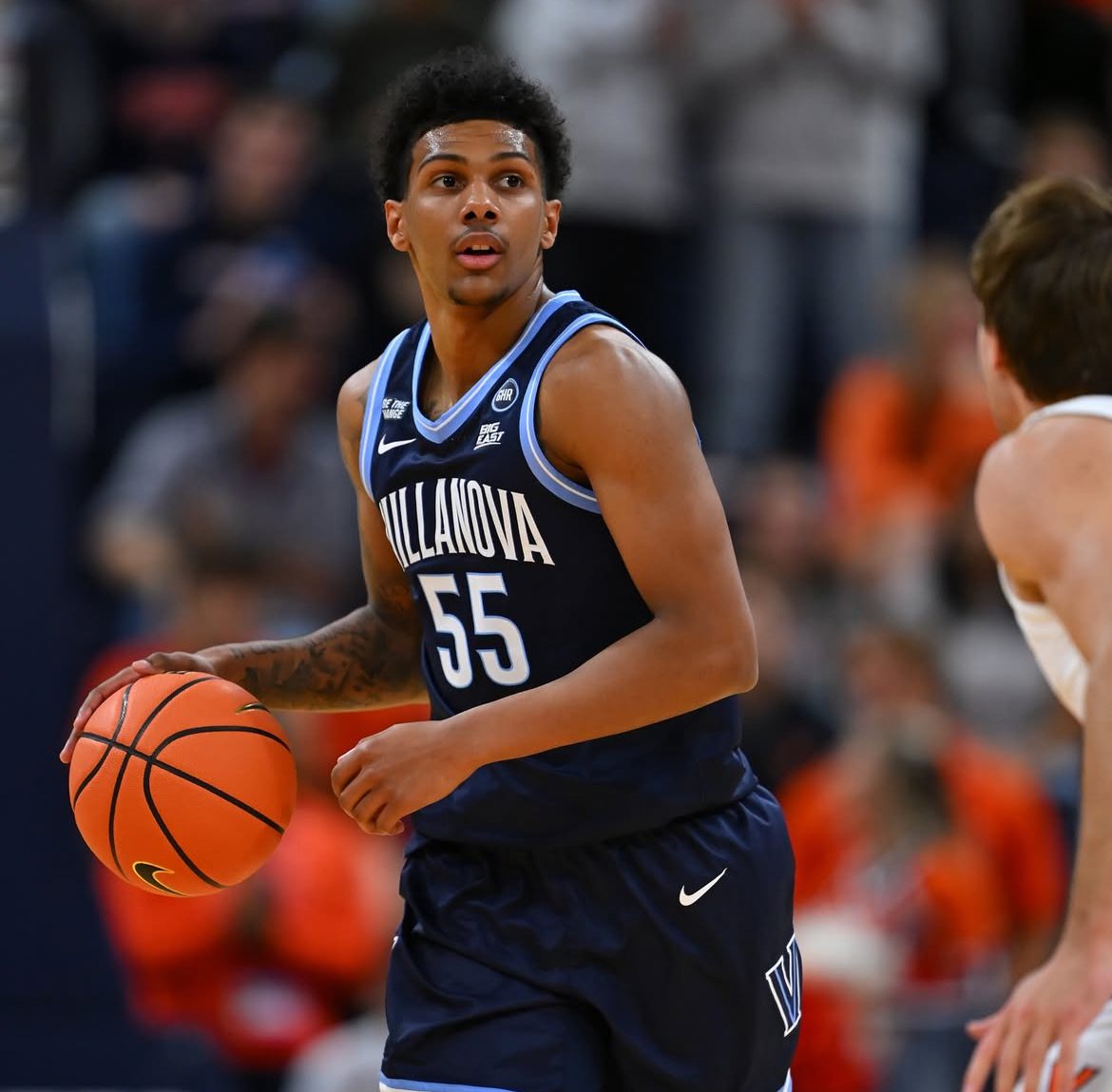
Villanova Men’s Basketball managed to retain just two of the ten players on their roster with eligibility beyond the 2025-26 season: starters Tyler Perkins and Matt Hodge. Beyond incoming freshman Adam Oumiddoch, the Wildcats need to completely reshape the rest of their roster: they’ve already added two senior transfers, Devin Royal and Kwame Evans Jr.
Outgoing transfers like Braden Pierce, Zion Stanford, Chris Jeffrey, Malcolm Flaggs and Niko Onyekwere probably departed in pursuit of increased playing time, while the decision for Acaden Lewis and Bryce Lindsay almost certainly came down to money: they committed to Miami and Indiana, respectively.
The Hurricanes and the Wildcats have enjoyed a similar level of success in recent seasons Both last made the Final Four in 2022 before missing three consecutive postseasons and undergoing a coaching change. Indiana, ostensibly a blue blood program, last won the national championship in 1987 and has just two NCAA Tournament appearances in the last nine seasons: neither program has a significant competitive advantage over Villanova.
Continuity is Worth the Price
Reports circulated that the Wildcats made a competitive offer to retain Lewis but the two sides ultimately couldn’t agree on the 6-foot-2 point guard’s NIL value. Allocating financial resources with care makes sense — all too many big name transfers don’t pan out — but in many ways, it makes sense to make that concession, to pay that extra $100,000 (or whatever the price ends up at) to bring back a familiar talent.
Per Jon Rothstein of CBS Sports, each of the teams in this past season’s Final Four brought back at least four key players from the previous season, whether starters or important reserves, before supplementing that talent core with transfers and recruits. Maintaining a core from year to year makes it possible to develop players, teaching them to excel in a system instead of having to give a crash course on the basics year after year after year.
Continuity matters and, while no program will ever bat 1.000, selling out for a talent known to fit makes better financial sense than taking a waiver on a plug-and-play transfer, one who will probably end up expecting a similar payout anyway. Per college basketball analyst Evan Miyakawa, the NIL market for college basketball players is up 65 percent from last season.